As we move into the final months of 2026, the world’s leading open water swimmers are preparing to descend on the coastal city of Cancún to mark the beginning of a new season.
The Open Water Swimming World Cup 2026/27 is forecast to be one of the most competitive to date, with more athletes vying for top positions, more tactical battles at play and more opportunities to race than ever before.
For the first time in history, the World Cup season will be held over two calendar years; a move which aims to provide more opportunities for international competition in the run up to the 2027 World Championships in Budapest.
The six-month long season will feature five stops across Mexico, Egypt, Italy, and Portugal; with a fifth soon to be confirmed.
While the other destinations have been firm features on the open water calendar in recent editions, this week will see Mexico reclaim host duties for the first time since 2015.
What to Expect - Women’s Field
It’s impossible to look ahead to next season without first acknowledging the complete dominance of Australia’s Moesha Johnson in 2026.
Although she has been at the forefront of the sport for many years, the 2024 Olympic silver medallist was untouchable last season, in a year which saw her win the Overall World Cup Leader trophy by 1000 points, become the first athlete in history to win every individual race on the World Cup calendar and become Pan Pacific Champion.
Her imperious campaign was not without healthy challenge, however, often in the form of top-tier talent such as Spain’s Angela Martinez Guillen, Italy’s Ginevra Taddeucci, Japan’s sprint specialist Ichika Kajimoto and Monaco’s Lisa Pou.
The Hungarian duo of pool-veteran Viktoria Mihalyvari-Farkas, who enjoyed a breakout open water season in 2026, and countrymate Bettina Fabian, who returned to her best after missing parts of the previous season due to injury, were also frequent contenders.
Germany’s Lea Boy and France’s Caroline Jouisse, who each boast a staggering 14 World Cup medals, are expected to be firm features in the front pack once again, as well as young stars, Klaudia Tarasiewicz (POL) and Louna Kasvio (FIN) and Brinkleigh Hansen (USA).
What to Expect - Men’s Field
As ever with open water swimming, different courses bring different challenges for these athletes; a celebrated and unique feature of the sport that audiences simply don’t get elsewhere.
As well as varying race conditions, the sheer quality of the men’s field heading into the 2026/27 season is sure to deliver some nail-biting finishes.
Overall World Cup Leader from 2026, David Betlehem, will undoubtedly be at the forefront of the charge.
Betlehem has previously spoken to World Aquatics about his desire to race competitively as much as he can in the lead up to the Los Angeles 2028 Olympic Games.
Particularly strong outfits from France including Sacha Velly, Marc-Antoine Olivier, and Logan Fontaine (FRA), and a strengthening Italian cohort of Andrea Filadelli, Marcello Guidi, Domenico Acarenza, Ivan Giovannoni, Pasquale Giordano, Dario Verani, and Gregorio Paltrinieri (who will miss the first stop due to injury), will ensure Betlehem is amongst good company to achieve that ambition.
Tokyo Olympic Champion, Germany’s Florian Wellbrock and his compatriot Oliver Klemet will be expected to claim podium spots as they did last season, while rising stars including Ethan Parker and Mexico’s own Paulo Strehlke Delgado are set to challenge for medals and top-ranked positions.
Will Race Tactics Continue to Evolve?
The 2026 season brought many different race tactic styles to the surface. Of note, the rise of solo-effort wins were present in both the men’s and women’s fields; something which also featured heavily at the Junior Open Water Swimming Championships in Argentina back in September.
Open water is traditionally more of a pack sport - similar to how peloton racing works in cycling, or how triathletes work together in groups, particularly in long distance racing.
Wellbrock and Johnson have proven especially adept at this style of racing, with the latter in particular favouring a desire to carve out an early lead on numerous occasions last season.
As the sport continues to evolve and go from strength to strength, it remains to be seen whether we’ll see the same, or more, variety of race trends going forward.
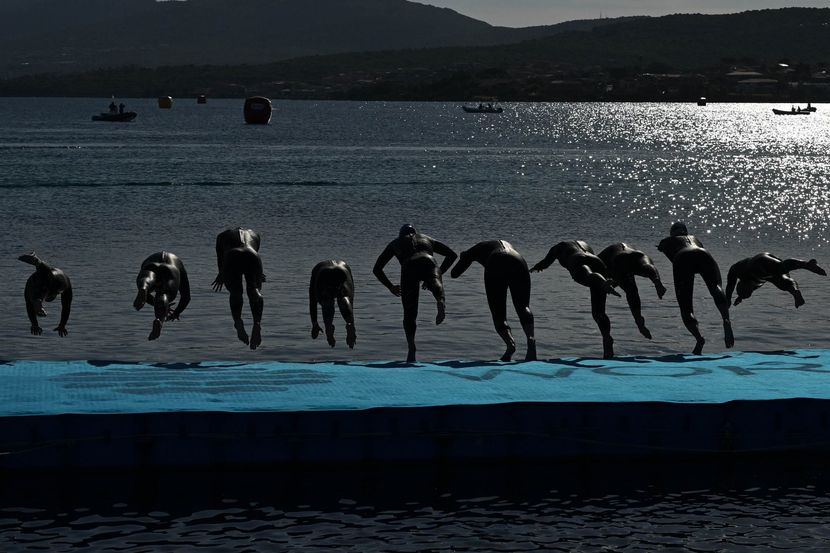
The Open Water World Cup 2026/27 gets underway on 6 November and will see 119 athletes from 27 National Federations toe the start pontoon across two days of racing.
As the sport continues to build momentum towards the World Championships in Budapest in 2027, and LA28, the forthcoming season yet again promises high-stakes action and unmissable racing.