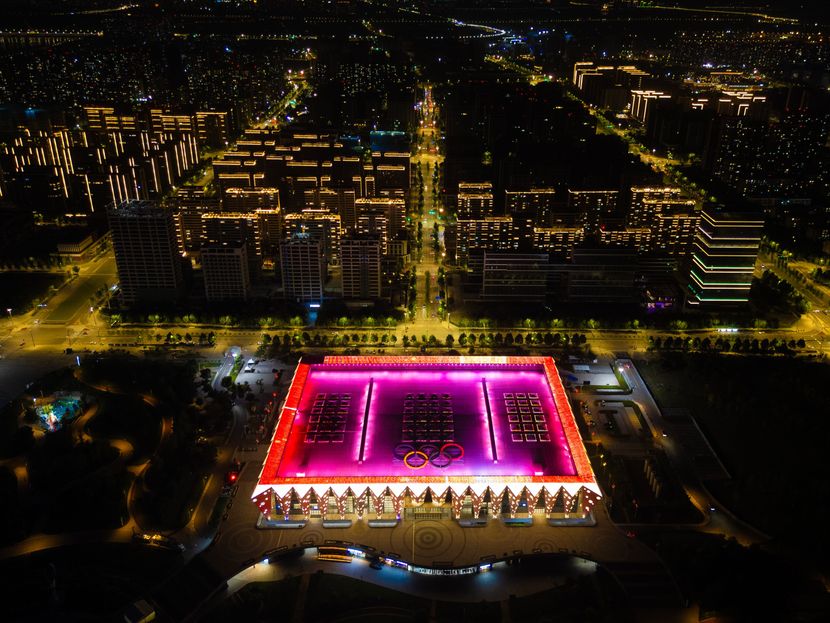
The third World Aquatics event in as many years has wrapped up in Xi’an, and while the thrilling routines at the Xi’an Olympic Sports Centre drew a packed crowd every day, the city itself offers a wealth of experiences that captivated the swimmers and aquatics fans alike.
The Xi’an Olympic Sports Centre is located within the Chanba ecological area of Xi’an. Here, a mix of tall residential towers, luxury hotels and the Chanba Wetland National Park offer a respite from the bustling crowds yet is close to major tourist sites and the historical old town that Xi’an is famed for.
If you’re planning your next visit for a World Aquatics event, here are some highlights for aquatics fans and curious travellers:
Old town
Xi’an is one of the four ancient capitals of China and served as the seat of power for various dynasties over 3,000 years. Its royal influence is evident in the old town, where a 14km city wall built in the 14th century remains intact. Within these walls stand the Bell Tower and Drum Tower – a mere 10 minutes apart. Both served as timekeepers for the townsfolk as well as for the distribution of important news and announcements affecting the city or country. The Bell Tower, with its striking architecture, was used to mark dawn, while the Drum Tower signalled dusk.
Terracotta Warriors
One of Xi’an’s most famous relics lies just 40km from the Xi’an Olympic Sports Centre: the Terracotta Warriors, a UNESCO heritage site that was first discovered in 1974 by a group of farmers digging a well. This archaeological site, dates back over two millennia, features thousands of life-sized figure and horses, each with unique expressions, guarding the tomb of China’s first emperor, Qin Shi Huang. It reflected the emperor’s ambition and the remarkable craftsmanship of his era. Thousands of domestic and international tourists visit this remarkable site daily and sometimes archaeologists can be seen in the excavation pits painstakingly restoring the relics as visitors look on in wonder.
Muslim Quarter
Xi’an marks the eastern origin for the ancient Silk Road, and it served as a vital hub for trade and culture exchange between Asia and Europe for centuries. It’s geographical position meant traders from distant lands brought exotic goods, new ideas and diverse traditions to Xi’an, resulting in a rich heritage that is still evident today.
Some of these influences are the most obvious in the city’s Muslim Quarter. Head there for its fascinating blend of food stalls hawking Xi’an’s delicacies such as Rou Jia Mo (Xi’an burger), Biang Biang Mian (hand pulled noodles), Yang Rou Pao Mo (beef or mutton soup with torn pita bread) and more. In between sampling the street food, make time to explore The Great Mosque of Xi’an, located within the Muslim Quarter. Dating back more than 1,200 years old, this iconic structure showcases a blend of traditional Chinese architecture and Islamic influences, further highlighting the city’s long history as a crossroads of diverse cultures.
Boundless Chang’an
For a cultural treat, enjoy a theatrical production, Boundless Chang’an, that explains the history of Xi’an and the Silk Road. Directed by one of its more famous native residents, award-winning Director Zhang Yimou, the show features nine segments and is a visual delight. Zhang is known for his films such as “Raise the Red Lantern”, “Hero” and more. He also directed the spectacular opening ceremony of the 2008 Beijing Olympics. The permanent production is staged at a location near the Xi’an Olympic Sports Centre.
Whether you’re drawn by the thrill of aquatic sports, the wonder of ancient mysteries, or the experience of vibrant local culture, Xi’an promises an unforgettable journey.