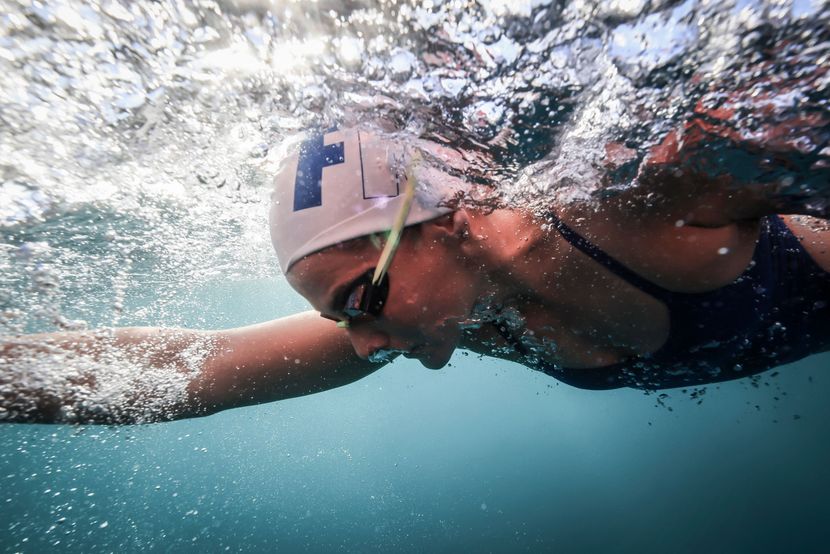
A new World Aquatics-backed study confirms the 16°C minimum temperature is an appropriate safety standard, even though elite swimmers can tolerate slightly colder water.
World Aquatics has reaffirmed its commitment to athlete safety following the publication of a new scientific study examining cold-water thresholds for open water swimming. This development highlights the role of governing bodies in responding to emerging evidence.
The research, conducted by scientists at Indiana University and published in the Journal of Applied Physiology, is the most comprehensive investigation to date of how swimmers respond to increasingly colder water during sustained, high-intensity swimming. "Race-intensity efforts" here means the swimmers maintained a pace similar to what they use in actual competition, not just casual swimming.
Open water swimming—an Olympic sport contested at the World Aquatics Championships, World Cup, and World Junior Championships—takes place in dynamic and often unpredictable environments. With these conditions in mind, World Aquatics, as the sport’s global governing body, establishes the rules that underpin safe and fair competition, including the current minimum water temperature threshold of 16°C. Relatedly, current rules mandate the use of wetsuits when the water temperature is below 18°C.
Testing Water Temperature | The Process Behind It on Raceday
Under World Aquatics regulations, water temperature is measured two hours before the race at three designated points around the course, at a depth of 40 centimetres. The official temperature is calculated as the average of these readings to ensure consistent and representative conditions.
Until now, that threshold had been based largely on expert consensus and limited experimental data. With this new study, regulations can now draw on robust physiological evidence, tightening the link between science and policy.
Testing Protocol | Trained Swimmers, Two-Hour Efforts
In a controlled swim flume—a channel of moving water used for swim tests—20 trained swimmers completed two-hour swims at competition speed, while water temperature was gradually lowered from 16°C. Researchers identified the point at which each swimmer could no longer maintain core body temperature (the "critical cold-water temperature," or Tcrit), the coldest temperature at which the body can't keep itself warm.
The results were clear: the lowest temperature at which swimmers could not maintain core body temperature was 15.0°C. Most athletes managed to keep warm just below the official limit, but some cooled down at 15.5°C or higher. This means a proportion of swimmers may not tolerate water just under 16°C.
Importantly, there were no notable differences in the critical minimum temperature at which thermal balance is lost between men and women, or between those wearing full-sleeve versus sleeveless wetsuits. This means the current rules on wetsuit design are safe for everyone, regardless of gender or wetsuit sleeve length.
While the results demonstrate that well-trained athletes can tolerate colder water than previously established, the researchers—and World Aquatics—emphasise that regulation must account for more than optimal laboratory conditions. This requires considering factors outside the lab.
Environmental conditions play a crucial role in these scenarios, introducing additional variables that impact thermal stress.
Open-water competitions introduce variables such as wind, currents, race dynamics, and differences in athlete performance across age groups and performance levels. These factors can significantly influence thermal stress and overall safety.
Based on these findings, the study advises keeping the 16°C minimum to ensure even the most susceptible swimmers remain safe, reinforcing the need for a margin above the lowest safe temperature.
The Wetsuit Question | Complex Interplay between Physiology and Equipment
The research also highlights the complex interplay between physiology and equipment. While wetsuits provide critical insulation that reduces heat loss, individual responses to cold water remain variable. Factors such as metabolic heat production, body composition, and surface area contribute to how effectively an athlete can maintain core temperature.
The findings validate World Aquatics’ cautious approach to regulations, showing that setting thresholds based on a range of athlete needs continues to prioritise safety—from juniors to masters and recreational participants.
This study marks a significant step forward in the evidence base supporting open water swimming regulations. By combining scientific rigour with practical application, it strengthens confidence in the rules that govern the sport at every level.