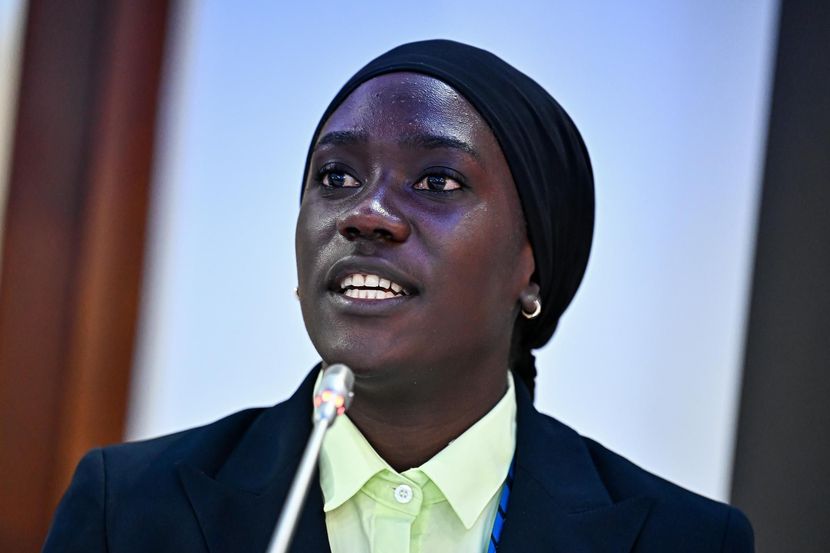
For Jamila Lunkuse, Olympic swimmer from Uganda and one of Dakar 2026's Athlete Role Models, the Youth Olympic Games represent far more than a major international sporting event. It is a moment to showcase the continent’s growing sporting ambitions and an opportunity to inspire the next generation of swimmers.
From the energy and storytelling of the opening ceremony to the atmosphere inside the competition venues, Lunkuse has enjoyed an event that she believes could have a lasting impact on African sport.
“The vibe is quite high,” she said, describing the opening days.
“The opening ceremony was just such a beautiful experience.”
For Lunkuse, one of the most encouraging aspects has been the sense of togetherness surrounding the competition. “I went for the finals yesterday and it was really nice to see the locals sharing [with] other countries […] when someone would win, they'll stand up and clap and it was just really nice to witness”.
This atmosphere has extended to the athletes themselves. Walking through the preparation areas, Lunkuse was pleased to see, “so many athletes mingling together and the excitement in the area”.
A landmark moment for African sport
That sense of connection is particularly significant given that Dakar 2026 represents a first major event of this scale on African soil.
“I've always been proud of being African, but even from the opening ceremony itself, I was even more proud,”
she said.
She believes the Games offer an important opportunity to demonstrate how far African sport has developed while bringing more elite competition to African audiences.
She also referenced the fantastic experience, “even for the athletes that are not necessarily swimming or even just like the younger generations, like the Senegalese, that are coming to watch the competition and just seeing the sport in person at such a high level”.
“I think it's just going to show that, as a continent, we are really growing. You can have talented swimmers here and grow natural swimmers here and have that same level of excellence.”
African swimmers making their mark
The emergence of African medallists, including Zain Ali's (EGY) double-victory in the Men's 50m and 100m Butterfly, provides an important source of encouragement for aspiring swimmers.
“The athlete [becomes] even more confident” Lunkuse said of the importance of winning on the world stage.
Referencing Nigerian swimmer, Abdul Jabar Adama, Lunkuse added “I feel like as a continent we have been performing at the Olympics and World Championships. So, this is just more of a reminder that we just keep going. If you have a lane, you have a chance.
“It really doesn't matter where you're from. The beauty of swimming is that you have your own lane, and you don't have to worry about someone else coming in and affecting your own race”.
Passing on experience to the next generation
Lunkuse has also been in the important position of Athlete Role Model in Dakar.
This has included “informal interactions with the athletes, checking in, seeing how they're feeling, talking about the ‘Inside Sports Sessions’, and just letting the athletes, as well as the coaches know about it”.
The position also offers Lunkuse a chance to draw on and share her own international experience.
“When you're an athlete, it feels like every bad competition is, you know, the end of the world or you tend to focus on the bigger achievements and then not really be proud of the smaller achievements. You kind of go from like one thing to the next”
Her advice:
“Pause and appreciate the journey and all you've done and be proud of yourself”.
“Not every competition is going to go perfect but it's not a reflection of you as a person,” she added.
Building a legacy beyond the medals
For Lunkuse, the legacy of the Games should extend beyond the medals and performances.
“The development of sport is really important, not just at an international level but also developing the sport at a grassroots level and having a really big pool of people involved”.
Lunkuse notes that a medal can open doors and prompt greater government support in sports that have not traditionally enjoyed the same recognition.”
But sustainable progress requires a broader foundation: more people participating, more opportunities to develop and a larger pool of athletes from which future champions can emerge.
Lukuse also knows how important it is for a country to see their athletes perform on the international stage. Noting how it “might also be an opportunity or a door opening for the sports to see more support from the government and also grow the sport bigger in the country”.
Dakar 2026 is an important milestone and as Lunkuse says, "a long time coming". The Games will look to continue its success for the future: the opportunities created for young athletes, the investment made in grassroots development and the next generation of African swimmers who are inspired to believe that they, too, have a lane.
The Youth Olympic Games 2026 continues until 13 November with the swimming competition until the 6 November.