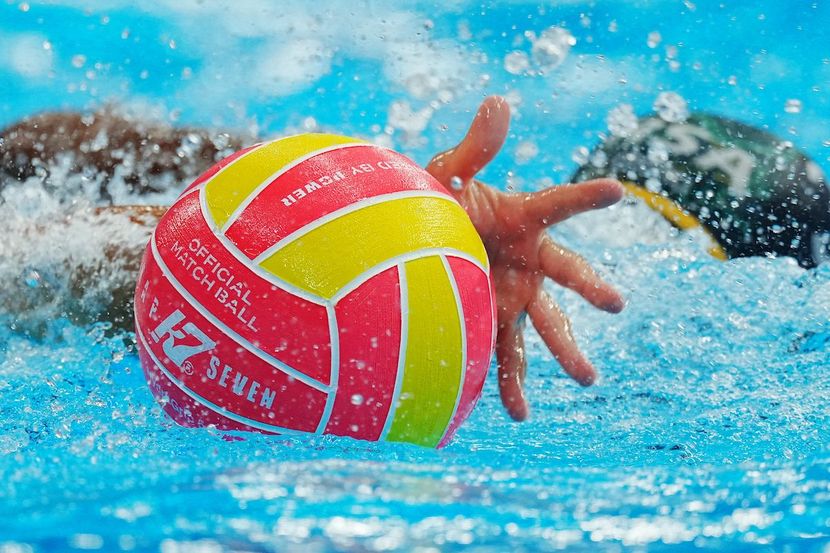
The global debut of men’s Water Polo 4x4 explodes into action in Dubrovnik with 17 teams contesting the seven-day event in the Old Town Harbour from Monday.
Overview
The evolution of the sport, like basketball, cricket and others, means finding new ways to attract people and players in easier venues, leads us to this style of competition. This variant has been played worldwide in “scratch” matches and training sessions where fewer people can be involved for many years. By bringing it to the world stage, World Aquatics hopes that it will expand the sport into regions that have had little or no water polo.
This competition in itself has set new standards by bringing along Lithuania and Mongolia into the World Aquatics sphere on the world stage for the first time.
The Competition
The competition will consist of a league phase/preliminary phase, establishing the rankings, followed by a knockout and classification phase.
The League Phase ensures that:
• All 17 men’s teams play the same number of preliminary matches
• every team plays exactly once on each of the three League Phase competition days;
• every team plays opponents from different seeding levels;
• every team plays one opponent from its own seeding pot;
• the competition produces a single ranking from 1st to 17th after three competition days;
• the number of matches remains compatible with the availability of one Field of Play; and
• the competition schedule can provide appropriate recovery periods and operational flexibility.
The system is designed to create a balanced, dynamic and competitive preliminary phase, while ensuring that the final ranking achieved during the League Phase has a direct impact on each team’s pathway through the Knockout and Classification Phase.
Initial Draw Groupings
Pot A: Spain, Croatia, Serbia, Montenegro, United States of America, Australia.
Pot B: Georgia, Malta, South Africa, Russia, Japan.
Pot C: Mongolia, Hong Kong China 1, Hong Kong China 2, Lithuania, Saudi Arabia, Bulgaria.
The draw was made last night and the schedule determined.
The Rules
All teams shall consist of eight players with four players in the pool at any stage — three field players and a goalkeeper. Four sets of play are available but the first to win three sets shall be designated the winner, negating the need for a fourth set. Shall the sets be squared at 2-2, then a shootout will follow to decide the victor.
The speed of the match comes from goalkeepers restarting play after a goal has been scored while normal rules for flying substitutions add to the velocity of the game.
Add to the size of the pool — 15m long by 12m wide — and the ability to score many quick goals, makes for attractive water polo.
History
In Gwangju, South Korea in 2019, the inaugural FINA Beach Water Polo World Championships were staged, showcasing what was possible in a confined space. This competition has evolved from that and hopefully will become another important competition in the water polo calendar.
Leading Players
Unlike the women’s competition where many teams turned up with senior international players, the competing nations have drawn on new talent. Below are some of the experienced players attracted to Dubrovnik.
Japan: Atsushi Arai who will play and coach.
Malta: Jake Tanti, Alec Fenech.
Russia: Roman Shepelev.
United States of America: Marko Vavic and senior captain Max Irving.
Day 1 Schedule
09:50, United States of America v Russia
10:40, Japan v Hong Kong China 1
11:30, Georgia v Hong Kong China #2
13:10, Australia v Malta
14:50, Serbia v Mongolia
16:30, Spain v Bulgaria
18:10, Montenegro v Lithuania
21:00, Croatia v Saudi Arabia