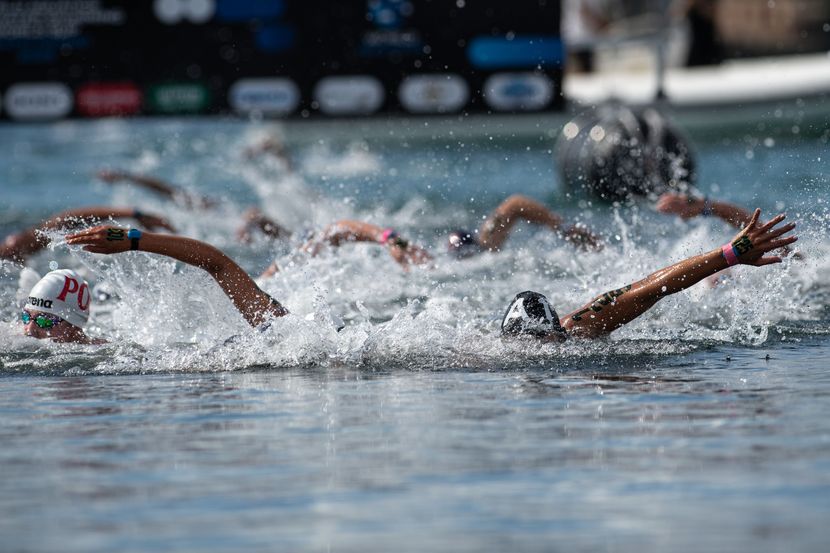
A growing number of World Aquatics Member Federations are committing to a shared framework for sustainability, helping shape how aquatic sport is governed, organised and delivered around the world
Water is the heart of aquatics. It is the environment that athletes across the ecosystem depend on every day.
So it is fitting that in the lead up to World Environment Day, a growing number of Member Federations are putting their name to the World Aquatics Community Sustainability Declaration - a shared commitment to embedding sustainability across every level of aquatic sport.
The Declaration is the latest step in delivering the Community pillar of the World Aquatics Sustainability Strategy, known as the Blueprint. While the Organisation and Events pillars guide how World Aquatics operates and delivers competitions, the Declaration brings the wider aquatics community into that journey, creating opportunities for federations to collaborate, share knowledge and learn from one another.
By signing, Member Federations commit to six areas of action: responsible leadership and governance, environmental responsibility, social equity and inclusion, sustainable events and operations, education and engagement, and collaboration and continuous improvement.
Importantly, the first group of signatories have signed for their own reasons, and together they tell the story of why sustainability matters across every corner of the aquatic world.
Protecting Fragile Environments
For some federations, the connection is immediate.
The American Samoa Swimming Association represents a small island community of fewer than 50,000 people, where environmental challenges can have a direct impact on everyday life. President Erika Radewagen says American Samoa knows first-hand how sustainability – or the lack of it – can significantly affect small, fragile environments.
That experience has driven the federation to take practical action, including encouraging athletes and participants to use reusable water bottles to help keep single-use plastics out of the ocean and off pool decks.
A similar sense of responsibility underpins the decision by the Fédération Congolaise de Natation to sign the Declaration. President Alain Kounoumono says the commitment reflects the federation's determination to align its actions with international principles of good governance, natural resource protection and social development through aquatic activities, while promoting a sport that is responsible, inclusive and environmentally friendly.
Thinking About the Future
Other federations view sustainability through the lens of stewardship.
Swimming Australia welcomed the Declaration as an opportunity to bring the global aquatics community together around a shared commitment. Executive General Manager of Government and International Relations Sam Watson says the federation sees itself as a custodian of the sport, and is mindful of adopting practices and behaviours that consider the needs of future generations.
In Norway, sustainability is closely linked to accessibility. The Norwegian Swimming Federation believes responsible choices can reduce environmental impacts while also helping keep the sport inclusive and affordable, particularly for young athletes.
Head of Development Tore de Faveri says the federation's ambition is to make sustainability a natural part of how aquatics is built in Norway for the future – a reminder that a greener sport and a more accessible one can go hand in hand.
Turning Ambition into Action
For several signatories, the Declaration formalises work that is already underway.
Canada Artistic Swimming joined the initiative as part of its commitment to lead sustainable sport “by swimming together”. In April 2026, the federation launched its own Environmental Sustainability Strategy, committing to annual emissions reporting and a target of reducing carbon emissions by 50 per cent by 2030.
CEO Steve Wallace says sustainability is not only about reducing environmental impact, but also about strengthening the long-term health and resilience of the sport, its events and clubs. The federation is already implementing sustainable event practices, expanding education initiatives and building partnerships that support climate action within aquatics.
The Hungarian Swimming Federation also brings a strong track record to the initiative. It was the first aquatics federation in the world to join the Sports for Nature Framework and has since focused on optimising supply chains, reducing resource use, recycling and supporting local communities.
One recent example saw 3,000 litres of recovered water from a World Aquatics event donated to help water newly planted trees in Budapest. As hosts of the 2027 World Aquatics Championships, the federation sees an opportunity to go further.
Head of Marketing and Sponsorship Szabolcs Birkas says the goal is to work with World Aquatics to develop sustainability initiatives that engage every stakeholder and establish best practice for the wider sport community.
Setting the Standard Through Events
Major competitions provide one of the most visible opportunities to demonstrate sustainable practices in action.
The Fédération Française de Natation has been working on sustainability initiatives for several years and is using upcoming events such as the European Championships to showcase that commitment.
Delphine Benoit, Head of the Sustainability and Heritage Division, says the federation is delighted to join the collective initiative and is committed to organising exemplary competitions, including at the upcoming European Aquatics Championships. Planned measures include phasing out single-use water bottles, offering locally sourced and seasonal food, and conserving water and energy resources.
A Shared Commitment
What unites these federations, despite their different geographies, priorities and challenges, is the recognition that no organisation can deliver a sustainable future for aquatics alone.
The World Aquatics Community Sustainability Declaration is designed as a living framework that will evolve alongside the sport. Through working groups, educational initiatives, and knowledge sharing, signatories will help shape how sustainability develops across the global aquatics community.
This World Environment Day, the Declaration offers a timely reminder that the future of aquatic sport depends on the choices being made today. From reducing plastics on island pool decks to setting emissions targets, rethinking event delivery and protecting natural resources, Member Federations around the world are showing that sustainability can take many forms.
The global aquatics community is moving forward together.