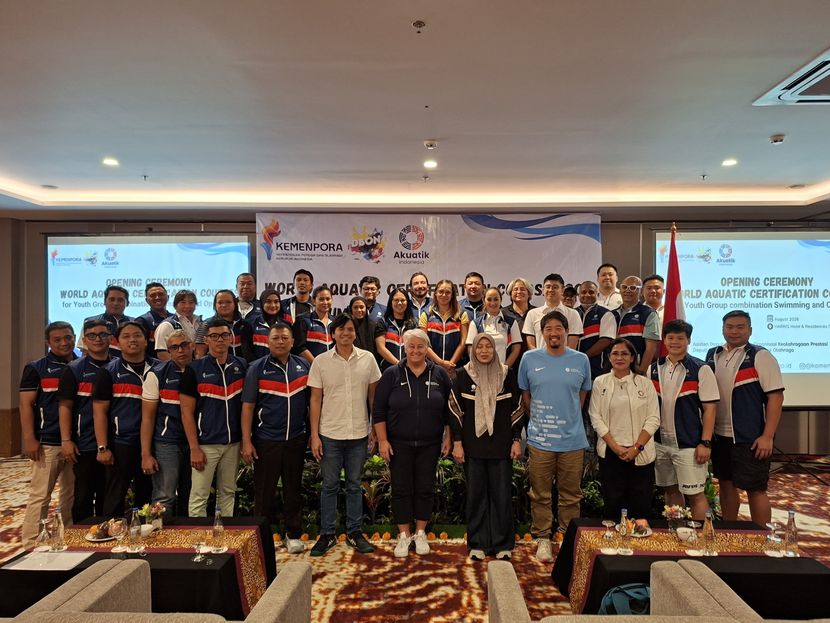
Coaches from 12 nationalities came together in Bali, Indonesia from 3 to 10 August for the first World Aquatics International Youth Coach Course combining Swimming and Open Water Swimming.
The World Aquatics' global Coaches' Certification Programme is aimed at raising coaching standards across all aquatic sports. It offers tiered certification (Age Group, Youth, and Performance Coach levels) via blended online and in-person learning, as well as ongoing professional development through the CORAL e-learning platform.
This course brought together classroom learning, practical sessions and international exchange, giving coaches the opportunity to explore shared coaching principles whilst developing their understanding of the specific demands of Open Water Swimming. World Aquatics provided 17 Scholarships for coaches and funded their course and accommodation costs.
For Mel Tantrum, Australian Swimming Paralympic Programme National Head Coach and lead developer of the World Aquatics Open Water Swimming Coaches Certification courses, bringing the two sports together was a natural step.
“While Swimming and Open Water Swimming are often viewed as separate sports, they share many of the same coaching principles, particularly when working with developing endurance athletes,” Tantrum said.
“The intention was to create an environment where coaches could learn from one another, explore common challenges, and gain a broader understanding of athlete development across both Open Water Swimming and Swimming.”
The course focused on areas including athlete-centred coaching, long-term athlete development, season planning, session design, communication and creating positive learning environments. Coaches also explored the physiological, technical, tactical and safety demands specific to Open Water Swimming.
The balance between theory and practice was an important part of the programme. Classroom sessions introduced evidence and coaching frameworks, while practical sessions allowed participants to apply what they had learned.
One highlight for Tantrum was seeing coaches quickly gain confidence in delivering Open Water Swimming sessions.
“One standout for me was how quickly the level of confidence grew for coaches presenting the Open Water Swimming practical sessions. The confidence to run coaching sessions in the ocean on pack swimming, drafting, feeding, and starts was incredible to witness first hand,” she said.
Learning from each other
With coaches from different countries and backgrounds, international exchange was central to the experience.
“Every coach arrived with their own experiences, challenges and perspectives, and those differences created a powerful learning environment,” said Tantrum.
“No single country or system has all the answers. When coaches share ideas across borders, it encourages innovation, challenges assumptions, and exposes people to new ways of thinking.”
Discussions around athlete development pathways and coaching challenges allowed participants to compare different approaches, while new professional relationships created opportunities for continued learning beyond the course. Coach Tantrum was pleased to see the strong friendships that were made during the time in Bali.
The international course received 18 participants' evaluations. The feedback reflected the positive experience, with 94% of participants stating the course went beyond their expectations, with an equal satisfaction score for the lecturer and classroom sessions. Particular highlights included open-water skills and techniques, safety and risk management, training planning and periodisation, athlete development and evidence-based coaching. The feedback also mentioned suggestions that could be included in the future such as practical open-water sessions, race simulations, real-life coaching scenarios, and additional time for discussion and exchange.
Looking to the future
For Tantrum, the ultimate measure of the course is what coaches take back to their athletes and programmes.
“My hope is that coaches leave with greater confidence, curiosity, and a stronger understanding of how to support young athletes throughout their development journey in sport,”
As coach education continues to evolve, the Bali experience provides a foundation for developing future programmes that support coaches – and ultimately, the young athletes they work with.
“One of the most rewarding aspects of the course in Bali was seeing coaches from around the world come together with a shared passion for developing young athletes. When coaches learn from one another, the impact extends far beyond the classroom and ultimately benefits athletes, clubs, and entire sporting communities around the globe,” Tantrum concluded.